
What we already know:
- Infants, toddlers, and young children thrive in environments when they are exposed to rich language and conversations.
- Reading aloud to children extends language development and vocabulary learning.
- Shared reading experiences have positive cognitive benefits. Phonemic awareness becomes a part of the cognitive schema as children make connections between sounds and letters, letters and words, and words in syntactically arranged sentences. These are essential skills that facilitate learning to read.
- When parents and caregivers read high quality stories with children, empathy for others is developed and children learn to think about themselves and how to deal with life’s challenges.
While we acknowledge that far too many children enter school without the benefits of enriched language and shared reading experiences, early childhood teachers also understand that their role is to extend the existing schema of children who have benefitted from families and preschools who provided these types of environments. At the same time, early childhood teachers also well understand their important role in the lives of young children who have not benefitted from these types of literacy rich experiences. And that’s a tall order to fill. How can teachers provide a literacy-rich environment for students that works well for both their students who have cups full or over-flowing with literacy experiences as well as those for whom their cups are empty or only half full?

When we think of the diversity among the students in early childhood classrooms, we typically consider race, culture, language, and socio-economic status. However, diversity among young learners is also evidenced in the little literacy cups they hold when they enter school for the first time. The responsibility of the teacher is to provide equitable opportunities for all students. Thus, how can teachers fill those empty literacy cups for some students so that they can progress as successful literacy learners along with their peers who bring with them full literacy cups?
The sooner teachers address literacy equity in the literacy lives of young children the better. Keith Stanovich examined the consequences of individuals in literacy acquisition almost forty years ago. He employed the term The Matthew Effect, referring to the Biblical passage that states that the rich get richer and the poor get poorer. This is true in so many aspects of life but is especially consequential for young children. Children who enter school with a wide range of rich literacy experiences will only gain momentum. They will complete kindergarten ahead of many of their classmates and each subsequential year their lead will be ever greater. However, children who begin their school lives with few rich literacy experiences, regardless of their innate ability to read, need to have their cups filled with all the ingredients needed to become readers. In many cases, with astute and expert teachers, their cups can be properly filled in their first year of school. However, when this doesn’t occur these children will end their first year behind their peers. And when they enter the next year behind, a cycle is created. They will end each subsequent year further and further behind their peers. Sadly, too, the gaps become increasingly greater. Reading interventions may help, but the gaps continue to grow as the expectations, learning standards, learning outcomes, and standardized testing incrementally raise the bar for students. Eventually, for too many children, the entire schooling process becomes a source of frustration and an affirmation that the problem is them.
But early childhood teachers have the power to interrupt this cycle created by the Matthew Effect. That does not mean that all factors that impede early literacy learning can be overcome within the classroom environment and by the teacher. However, teachers can fill those cups with all the ingredients needed in the recipe for successful literacy development. At the same time, teachers can continually replenish the literacy cups of those children who entered school splashing over with rich literacy experiences.
Setting the Stage in Early Childhood Classrooms for Enlightened Literacy Teaching and Learning – and Keeping the Talking Going:
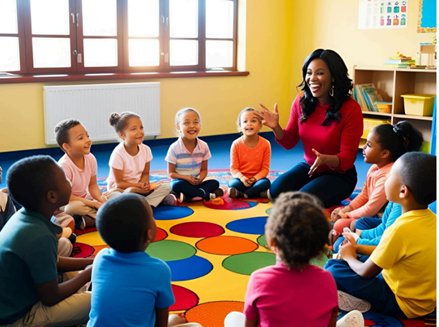
Circle time and morning meetings are standard fare – and valuable carved out time for children to interact with each other and their teachers. Many teachers use this time to read aloud to their students, sometimes calendar math is incorporated into this time, and often children are invited to talk. As a teacher, I loved this time with my students. I danced and sang the boogy-woogy alphabet with my kindergarten students. I read to them and connected stories to their lives. I read a minimum of three books with my students: one was focused on the literacy skills we were learning (for example, books that featured phonological skills like rhyming words or alliteration); a story book that facilitated discussions about characters, plot, and settings; and a third book that my children selected. These were often favorites they wanted me to read again (much like how children ask parents to read books over and over again). I found that these books were sort of like comfort foods – like mashed potatoes, pizza, or chicken soup that you crave because they taste so good to you. The comfort books were also opportunities for children to jump in and read with the teacher … a chorus of voices with the fun parts, punctuated with laughter and joy!
Always, however, the sacred circle time included talking. All kinds of talking. I’ve always learned a great deal by observing other teachers in their classroom meetings and circle times. There are many, many ways to get students talking and learning from each other as well as the teacher. I’ll share some ideas with you, but there really is no limit to how to engage students in meaningful conversations, even when you have some students who seem reticent to jump into discussions.
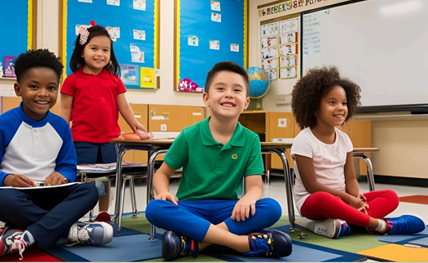
- Engage students in observations and “data collecting.” For example, observe the types of shoes children are wearing. Count how many are wearing sneakers, how many are wearing sandals, boots, and other types of footwear. Make hash marks on the board for each category. Write sentences based on the data:
Ten students are wearing sneakers.
Five students are wearing sandals.
One student is wearing boots.
One student is wearing a pair of crocks.
Then invite students to further draw a conclusion about the shoes students are wearing:
Most students wear sneakers to school. -or-
Five out of ten students are wearing sneakers today.
Depending on the developmental level of students, you can create additional and more sophisticated sentences. Invite students to read the sentences with you. Leave the sentences on the board so students can read them later and begin your class meeting/circle time the next day by reading the sentences again together before suggesting a different “inquiry.”
Other suggestions for observations and data collecting:
- On a rainy day – observe what types of raingear students brought to school – raincoats, hats, umbrellas, etc.
- What was the last food item students ate?
- What is their favorite sport, game, or television shows?
- What is their favorite color?
(The options are endless. Also note — you are teaching both literacy and math skills!)

- Share something interesting about your life. Teaching is a relationship. You don’t have to be overly personal, but if your dog or cat does something funny, share it. These types of experiences make connections with the lives and experiences of your students. I remember sitting at the front of my kindergarten students – criss-cross applesauce – preparing to read a book one day when I noticed that I was wearing mis-matched socks – one was brown and the other was black. Oh my! I showed my students my socks and we all laughed together. One student asked me why I wore different socks. “Well, I think my bedroom was a little dark. Or maybe when I folded my socks and put them together, I was in a hurry.” But I told them, “You’ll just have to get used to my silly socks for the rest of the day!” For several days, my students asked me about my socks – making sure I’d gotten it right. I must admit that a couple of times later in the school year, I purposefully mis-matched my socks just for fun.
- There were days when I was a little tired in the morning because I’d stayed up late to read a great book. I shared this with my students and, of course, they wanted to know what book I was reading. Sometimes it was a mystery novel. Other times it was a favorite book by Marilynne Robinson or Silent Spring by Rachel Carson. I’d say a sentence or two about what I loved about the book so much that I couldn’t put it down to go to sleep. It gave my students a peak into my life as a reader and, in the bargain, modeled what it means to love reading.
- Give children a peak into your life as a child. Maybe you could bring in your school picture from when you were their age. That’s often eye-opening for children as they look from your face now to your face as a young child. And they can imagine what they’ll look like as adults. Maybe you could invite them to create a picture of themselves as adults and as a class create a gallery walk of their own school pictures next to their “adult” portraits.
- Talk about things you are curious about. This can be connected to current events that your children may have heard about at home, on the television, or while listening to adult conversations. For example, bad weather may be predicted for the coming season because of “el nino” conditions. Or perhaps the cicadas are on route to your state. Maybe your town is planning to erect a statue of a local hero or there is a farmer’s market opening the following weekend. Share your curiosity and hatch a plan to learn more and bring the children along in the inquiry. How do you go about finding information? Some children will suggest looking it up on the computer. Others might suggest simply asking someone at school or home. This is how inquiries are investigated – very important skills for young children. And, all the while, they are talking!
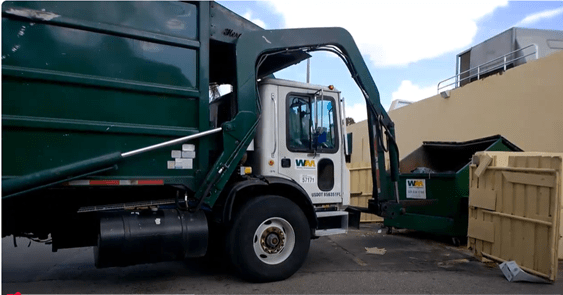
I’ve learned that there are many, many videos and books about construction, front-end loaders, trucks, and machinery and that children are often delighted with the videos and books. So, consider what’s going on in the neighborhood around your school. Are there construction projects, tree trimming activities, landscapers working, or any other number of everyday life activities that are worthy of sharing with your children? Consider taking your students on a walk to stand a safe distance away to watch the workers and the tools they use to complete their work. What an amazing opportunity for children, upon returning to the classroom, to talk about what they observed, draw pictures, and construct a short story about the experience. And, if possible, it would be amazing if children could create a mini-construction project in the classroom or on the playground.
This is a perfect opportunity for the teacher to utilize a strategy called the Language Experience Approach. After an experience (for example, students watching a landscaper plant flowers or a truck emptying a dumpster), students dictate sentences about what they observed while the teacher writes their sentences on chart paper, the board, or on a computer screen), and then participate in a shared or choral reading of the story that is created.
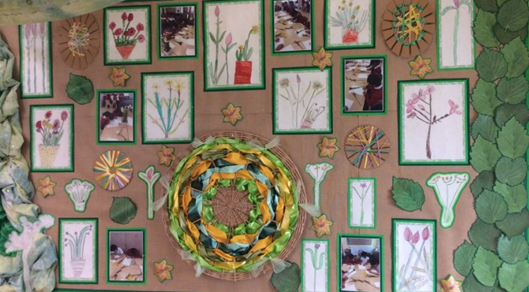
There’s no better way to get students talking than to engage them in conversations about their own work. I’m a huge fan of the Reggio Emilia Approach to teaching young children in which art is acknowledged as one of the many languages of children. Carefully and considerately designed art projects give young children an opportunity to express themselves in creative ways. Perhaps more importantly art provides children with something to talk about as they discuss the process as well as the product of their artistic endeavors. I encourage teachers to explore the ideas that have been generated by those who employ a Reggio Emilia Approach in their classrooms. For me, there is much promise in this approach in creating a truly child-centered and an amazingly appealing classroom environment.
Talking – and lots of it – represent the building blocks of literacy development. As the saying goes: If I say it, I can write it, and if I write it, I can read it.
 Moving Beyond the Reading Wars
Leave a comment