

By Deborah Duncan Owens
The Gradual Release of Responsibility is a framework in which the teacher facilitates students’ transition to independence in learning. This model is highly relevant when developing the ability of young literacy learners to start their journey as independent readers. Elementary teachers begin the process early in the literacy lives of their students. I think the most effective way to think about the process of gradually releasing responsibility for young readers is a model that scaffolds literacy development with an I Do, We Do, You Do model.
For example, teachers immerse students in read aloud experiences beginning in preschool and kindergarten and throughout the elementary years. This reflects the I Do component as teachers model the act of reading. Excellent and knowledgeable teachers understand the importance of reading aloud in teaching reading. They pause to ponder at key moments in the story, explain what new vocabulary words mean, and talk about concepts important to the story. For example, the setting of the story may be on an island, near a volcano, in a different country, or in a different historical period. Through these actions, teachers are metacognitively modeling the process of reading.

The We Do component of the model takes place when teachers work with small groups of students as they read together. It is in small groups that teachers work closely with their students as they read together with the scaffolding of the teacher while encountering words they are learning to decode and learning comprehension strategies. The We Do component is also a part of whole group instruction when a new skill is taught to students. It can take different forms. For example, when introducing consonant blends for the first time, the teacher provides opportunities to practice words with consonant blends as a class.
The You Do component is when students engage in independent reading. The You Do component emerges in the early elementary years and is actually the primary point of reading instruction – when students are able to pick up a book of their choice to read on their own. Independence emerges because it isn’t necessarily an even path for all students. Even in the earliest phase of literacy development, some students will pick up a book and read it on their own. In some cases children may actually be able to read the words. Other children may be mimicking the reading of the story as they have seen the teacher do. I loved watching my kindergarteners pick up a book and sit with one of the teddy bears or stuffed animals I kept in my classroom and read the book to their little companion.
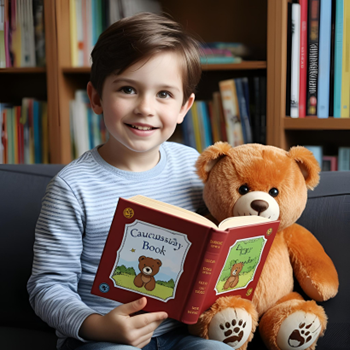
The You Do component doesn’t truly yield an independent reader until a student has learned the foundational skills of reading and is ready to engage in independent reading without scaffolding and with a book of their own choosing. This is when the magic really begins! This is when students latch onto their own favorite books to read. In my experience as a literacy specialist, I noticed that second grade is a critical point in the lives of literacy learners. Many of my second graders would, by mid-year begin to seek out books they love to read. To be sure, there can be a wide variance in reading skills with second graders. Some are still not completely secure with their decoding skills and need more scaffolding on their way to independence as readers. And that only makes sense. Developmentally, second graders can be quite diverse simply because of their date of birth. Some second graders are six years old, some are seven, and some may even be eight years old if they have repeated a grade. So, teachers need to understand and embrace the entire notion of the emergence of readers and enable them to emerge at their own pace and not hurry them beyond their developmental capacity.

One point that is important to remember is that the I Do, We Do, You Do model is applicable for all students throughout elementary, middle, and high school. Teachers should always be in the process of modeling good reading, should always provide opportunities to scaffold students as they engage in increasingly complex literacy activities – the We Do component. And, finally, true learning hasn’t taken place until students can engage in the I Do component – working independently.
 Moving Beyond the Reading Wars
Leave a comment